How to choose windbreak glass? Choosing the right windbreak glass for a restaurant or cafe transforms an outdoor space into a year-round income-generating investment. The right system offers customer comfort, increases seating capacity, and enhances the business's aesthetics. This guide examines, from an expert's perspective, how to choose windbreak glass, what criteria to consider, and which model is suitable for which business.
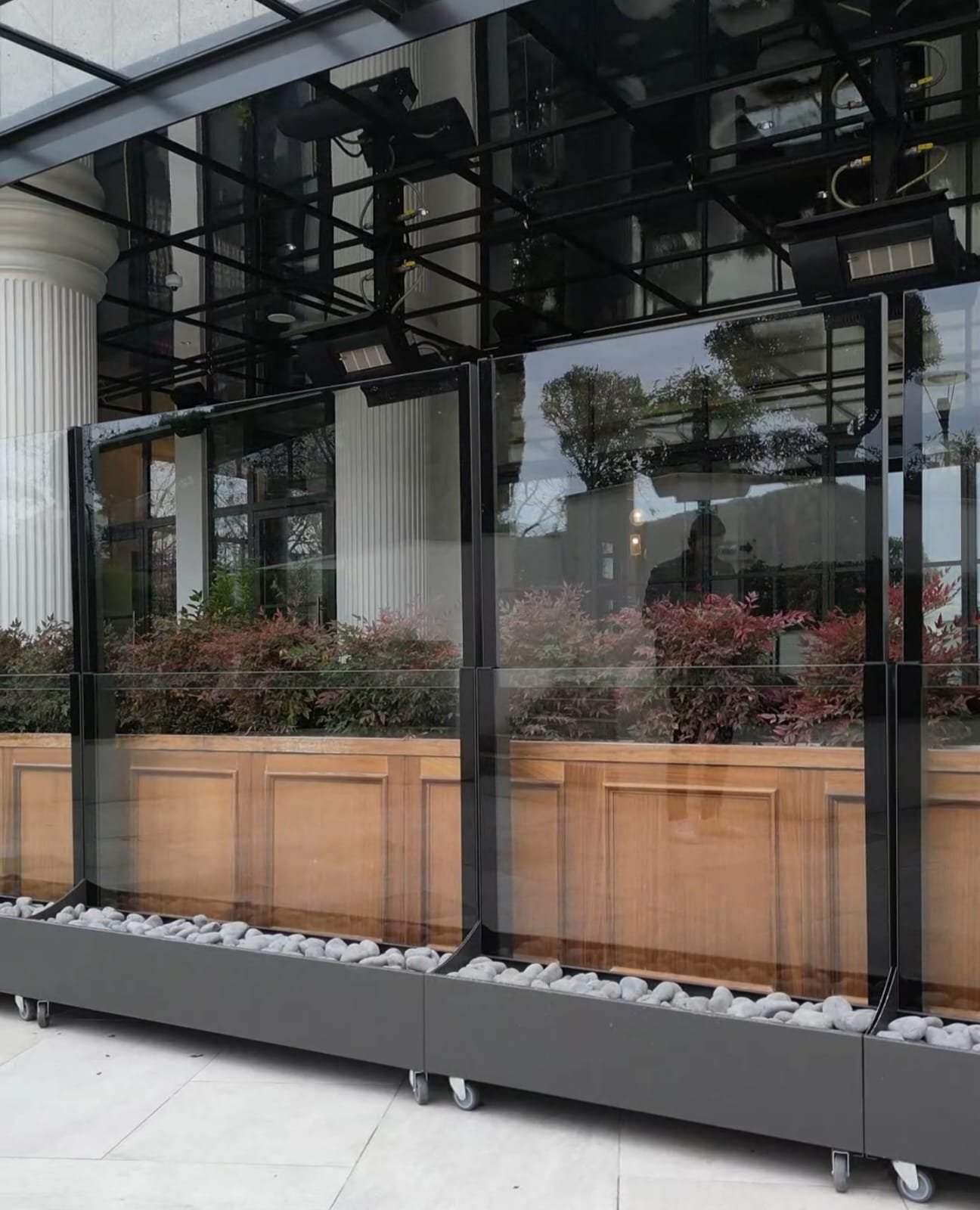
Why Windbreaker Glass?
Outdoor seating areas in cafes and restaurants remain unused for much of the year due to wind, dust, rain, and cold. Windbreak glass systems can transform these areas into enclosed, comfortable lounges. When the weather is nice, the panels can be opened to create a refreshing atmosphere; in inclement conditions, they can be closed, allowing service to continue uninterrupted. This flexibility directly increases the business's revenue potential.
Selection Criteria for Restaurants and Cafes
When determining the right system, the business's location, usage intensity, and aesthetic expectations are decisive factors. The following criteria are the most important to consider when selecting windbreak glass for restaurants and cafes.
- Usage intensity: Motorized systems provide practicality in areas that are frequently opened and closed.
- Location: In coastal and windy regions, choose laminated glass and corrosion-resistant profiles.
- Aesthetic: Choosing RAL colors and slim profiles that suit the style of the space completes the look.
- Security: Tempered or laminated safety glass is essential in areas with high customer traffic.
- Budget: Manual and piston-operated models are economical, while motorized models are a premium option.
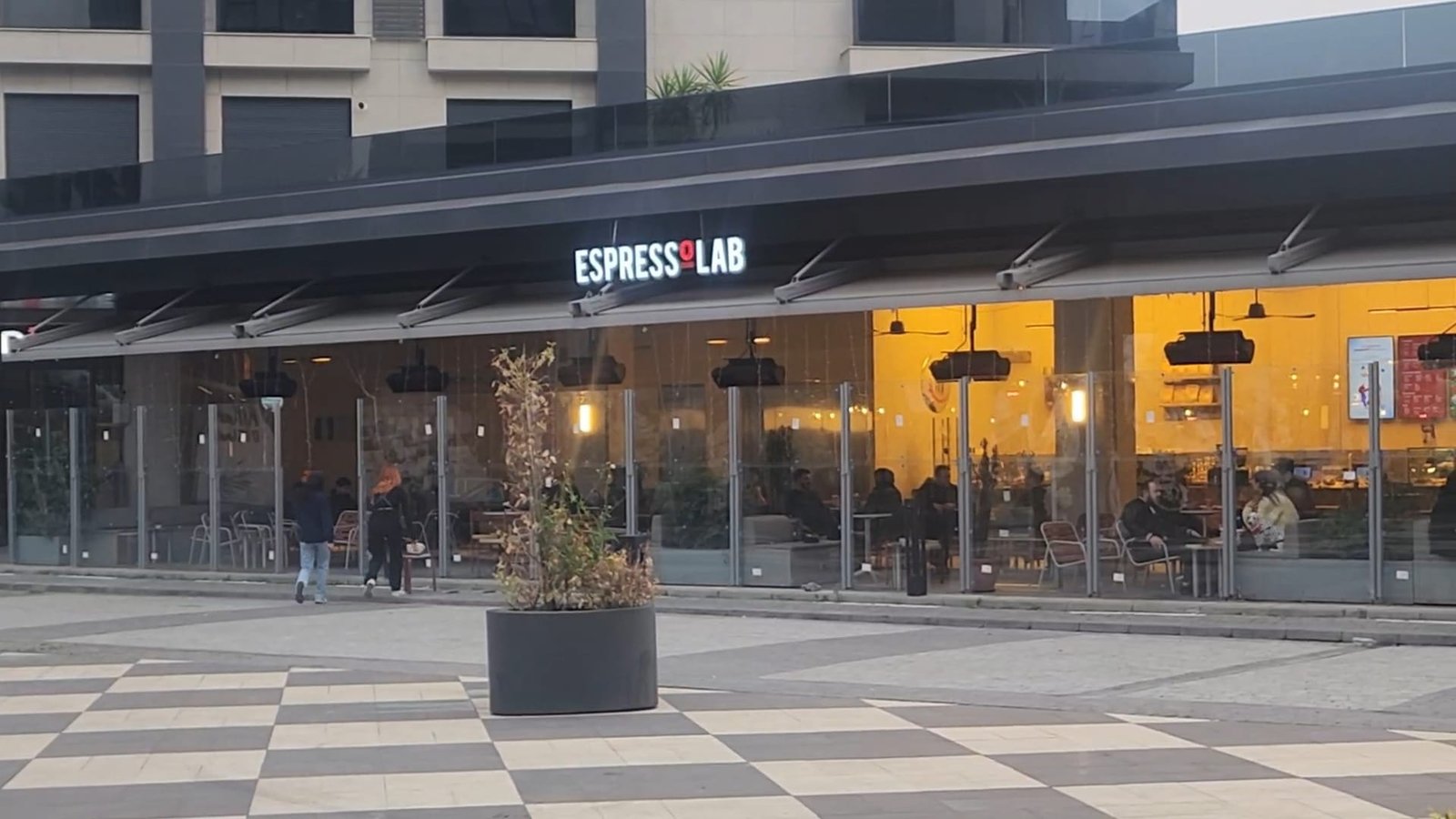
Which Model is Suitable for Which Business?
For small boutique cafes, portable planter systems offer both flexibility and a green touch. In busy restaurants, fixed or motorized systems provide durability and comfort. Systems with seating areas save space by functioning as both a barrier and a seating unit. In hotel restaurants and facilities, motorized systems stand out as a prestigious and comfortable solution.
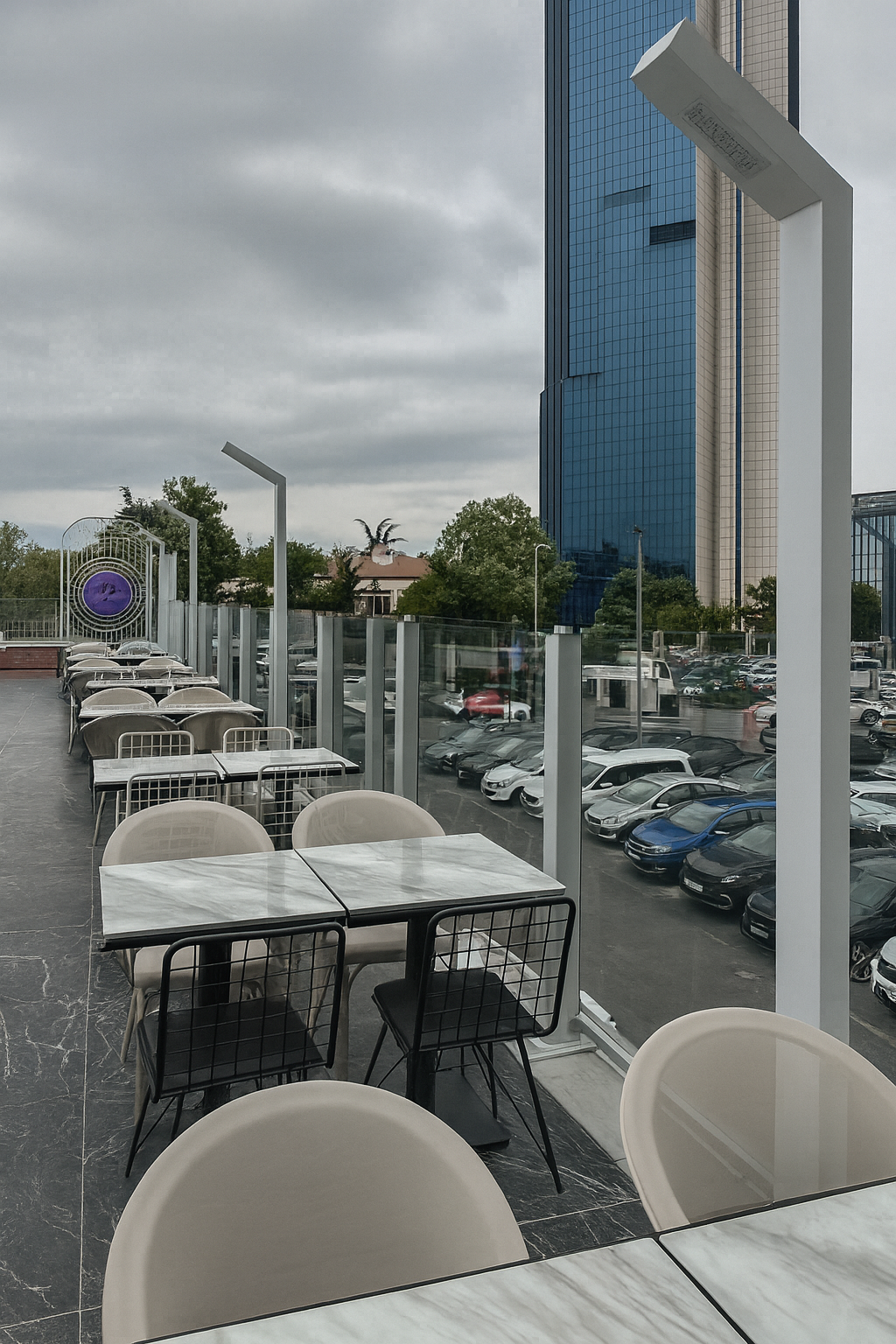
Glass Type and Durability
Safety is a priority in businesses. Tempered glass shatters into harmless pieces, while laminated glass, with its layered structure, provides both safety and sound insulation. For busy restaurants and cafes, at least 8 mm tempered or laminated glass is recommended. The electrostatic powder coating of the aluminum profiles ensures a long lifespan against outdoor conditions.
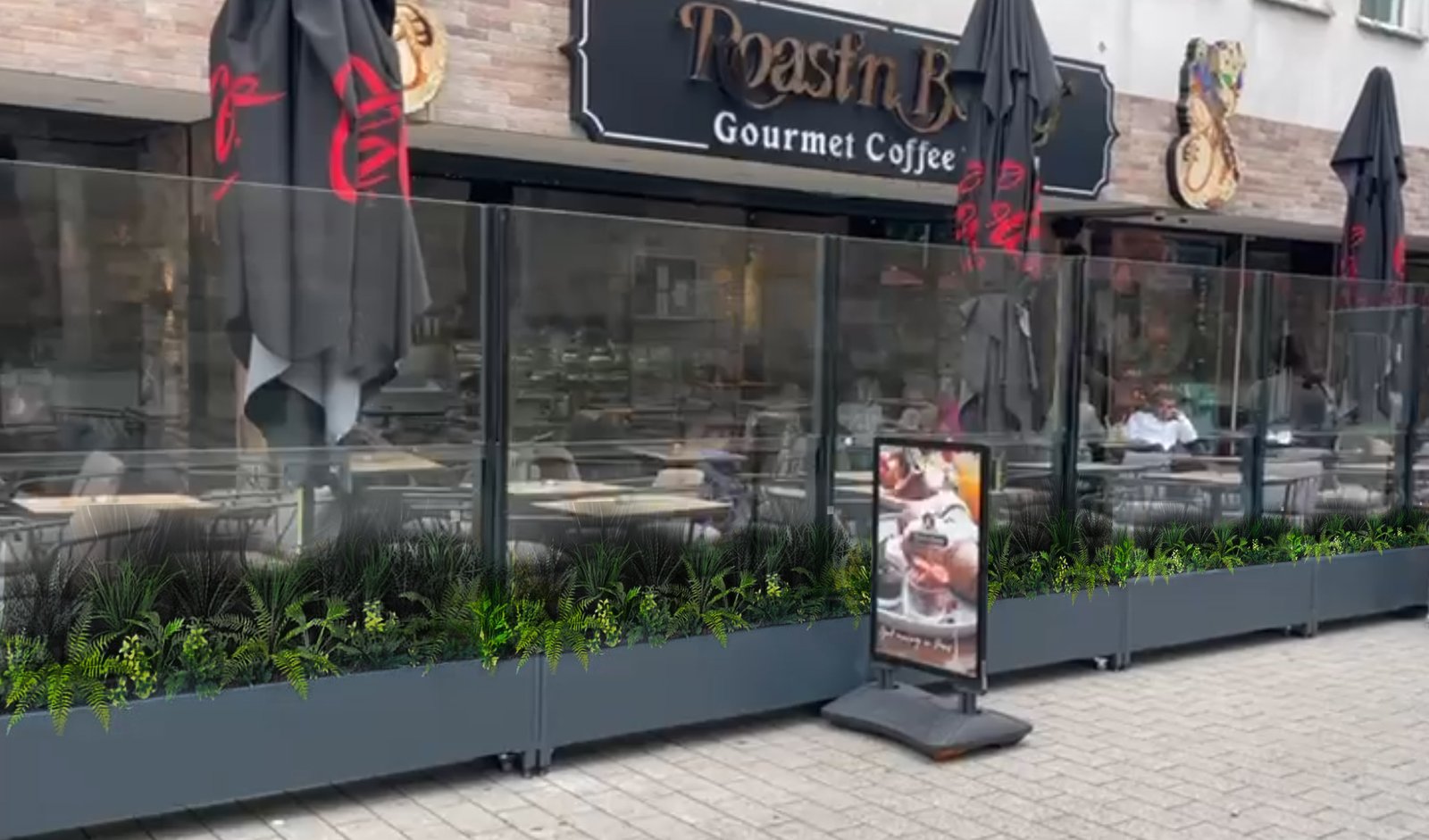
Maintenance and Longevity
Windbreak glass systems for restaurants and cafes will operate smoothly for many years with regular cleaning and annual mechanism checks. Glass surfaces should be cleaned with a neutral detergent, rails should be dust-free, and seals should be checked periodically. This simple maintenance routine preserves both the appearance and performance of the system.
Contributions of Windbreak Glass to the Business
Investing in windbreak glass for restaurants and cafes is a decision that pays for itself quickly. The ability to use the outdoor space even in winter increases the business's annual customer capacity and, consequently, its revenue. Modern and stylish glass barriers enhance the brand image of the establishment, offering an inviting appearance to potential customers passing by. They also reduce wind and noise, increasing customer comfort and contributing to a loyal customer base. Furthermore, they offer advantages in terms of energy efficiency: they make indoor heating and cooling more effective, balancing operating costs. In short, a correctly chosen windbreak glass system is an investment that is aesthetically pleasing, functional, and economical.
Frequently Asked Questions
What glass thickness is suitable for a restaurant? For heavy use, at least 8 mm tempered or laminated glass is recommended.
Does windbreak glass increase seating capacity? Yes, it significantly increases capacity by making underutilized open spaces usable year-round.
Assembly and Installation Process
The installation of windbreak glass for restaurants and cafes begins with accurately measuring the space. A team of experts assesses the floor structure, plans the module widths, and determines the appropriate fastening method for the system. Professional installation is crucial for the correct mounting of profiles, the smooth opening and closing of panels, and the proper functioning of water drainage. Installation is generally planned to minimize disruption to business operations and is completed quickly. Correct installation is fundamental to the long-lasting and safe operation of the system.
To choose the model that best suits your business windbreak glass models You can browse our page for other guides. blog You can browse our articles.


 Turkish
  English
  German
  Italian
  French
  Russian
  Arabic
  Spanish